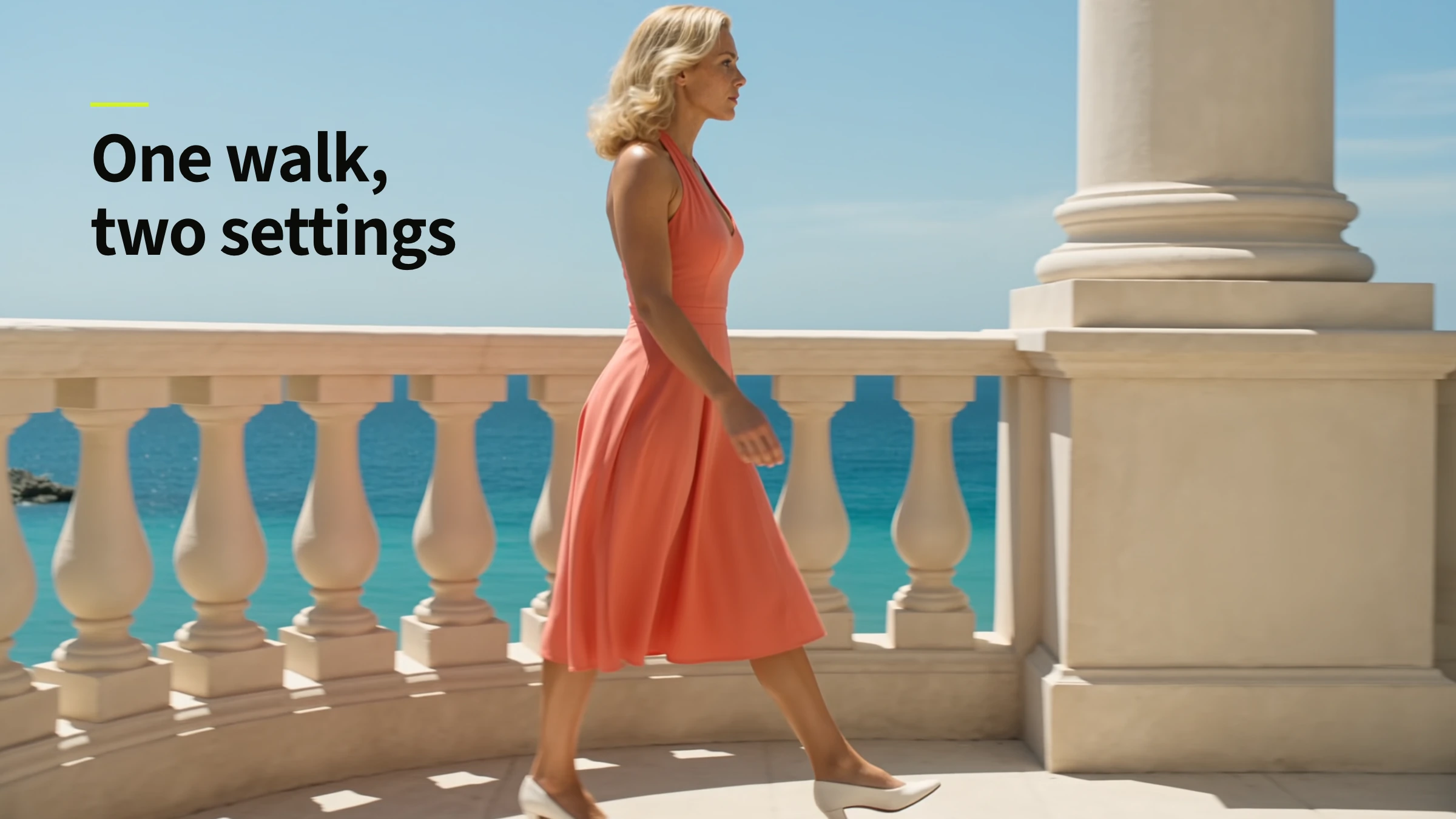
AI production can make a brand film when the brief can be expressed through controlled visual moments and the studio has a clear system for direction, identity, continuity, rights, revisions, editing, and delivery. It fits imagined worlds, designed environments, visual storytelling, and shots that would carry a heavy physical production burden. Exact documentary evidence, precise product behavior, and extended performance require a careful production plan.
The real decision happens at the shot level, not the technology level. A brand film can combine supplied assets, captured material, designed stills, generated motion, generated audio, graphics, and editorial work. A studio worth hiring can tell you why each method fits each visible requirement.
Start with the moment the audience needs to see. Then test whether AI production can hold that moment accurately and consistently. That test, run shot by shot, is the whole answer.
Good fits for AI-driven production
AI-driven production fits a film built around atmosphere, visual metaphor, imagined settings, character passages, or environments that would be brutal to stage physically. It also fits a campaign that needs related poster frames, held images, crops, and short visual versions cut from one direction.
Strong candidate shots have:
- A clear subject and one readable action
- A defined opening and closing state
- Approved visual references
- A manageable continuity burden
- A composition with room for the required crop
- A specific purpose in the edit
A studio should be able to describe the shot before creating it. "Make it cinematic" is not a shot description. It leaves identity, action, camera, and edit purpose unresolved, and unresolved is where budgets go to die.
Requirements that need extra care
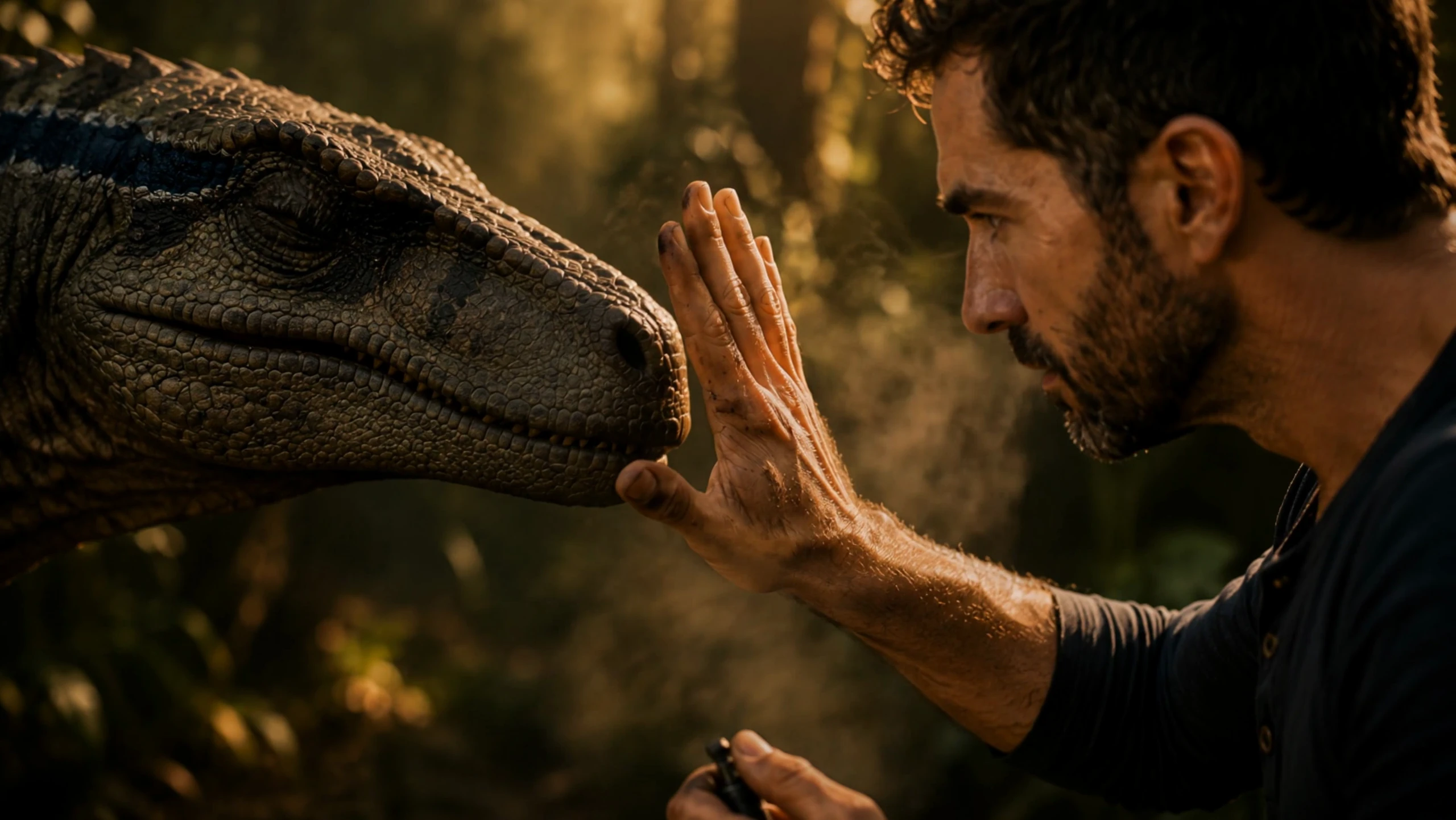
Some requirements carry a heavier control problem: an exact demonstration of product operation, small typography that has to stay readable, a long spoken performance, complex hand contact, crowded choreography, or a faithful record of a real event.
A brand film can still contain these. The production plan assigns them to supplied material, direct capture, graphics, a shorter shot design, or a carefully staged combination. Make the studio name the method and the review standard for each demanding passage, in writing.
Factual claims need visible support. A generated image never gets to serve as documentary evidence for an event, result, property, person, or product behavior the business cannot verify. A studio that shrugs at that line is a studio that will get you in trouble.
A director gives the film one set of rules
Direction turns the business objective into a premise, treatment, visual language, shot sequence, and edit. The director decides what belongs in frame, how action reads, when a shot ends, and which details must match across the film.
Without that control, individual shots look polished while the sequence falls apart. Faces change. Wardrobe shifts. Sets lose landmarks. Props move. Camera direction flips. The audience gets a series of disconnected images wearing the same color grade.
Ask who owns these decisions:
- The audience and intended effect
- The premise and treatment
- Character, wardrobe, product, set, and prop rules
- Shot purpose, action, camera, and timing
- Take selection and continuity review
- Repair, replacement, and editorial decisions
- Sound, versions, and final handoff
One accountable direction keeps those decisions connected. A committee of prompts does not.
Ask how identity consistency is controlled
Identity consistency covers every recurring subject the audience must recognize: a person, character, product, vehicle, room, building, wardrobe set, or branded object.
Ask the studio:
- Which approved references define each identity?
- Which views, details, colors, markings, and proportions are fixed?
- How are wardrobe, hair, props, and set state recorded?
- How is each take compared with the approved reference?
- What happens when a strong take contains one identity failure?
- Who approves a change to the identity record?
The answer should describe a repeatable review process. A folder of attractive references is not a process. It is a folder.
Ask how the studio handles rights
The written scope identifies every supplied asset and who has permission to use it: images, footage, copy, music, voices, likenesses, identity elements, product designs, and the rest of the source material.
Ask these before production:
- Who confirms the rights for supplied material?
- How are permissions for a person's likeness or voice recorded?
- How does the studio review the usage terms attached to created material?
- Which publishing surfaces and uses are included?
- Which source files, usage records, and open questions come with the handoff?
- What happens when a reference creates an unresolved rights concern?
Get the answers in writing. Then you can send uncertain material for review before it shapes the film instead of after it ships.
Ask how revisions work
AI-driven revision can mean changing a brief, rebuilding a reference, repairing part of a frame, replacing a shot, changing the edit, or creating another delivery version. Each path hits continuity differently.
Make the studio define:
- Which direction and reference checkpoints require approval
- What the buyer reviews at each checkpoint
- How a change to an approved direction affects later shots
- When the studio repairs a take and when it replaces the shot
- How rejected material and open issues are recorded
- Which final crops, durations, held frames, audio, and source files will ship
A clear revision path catches a wrong turn while it is still cheap. It also keeps "fix this" and "change the approved direction" from getting billed as the same thing.
Review the proposed production plan
Before approving the scope, ask for a written list of shots or sequence beats. Each one names its purpose, subject, action, setting, continuity requirements, source inputs, review point, and delivery use.
Read the list as an edit. Does the film establish the world, advance the idea, give the important action enough time, and end on a usable state? Does it support every required surface and version? If the list can't answer that on paper, the finished film won't either.
The motion capability shows the films, characters, environments, held frames, crops, and versions Keyframe0 produces. Keyframe0 uses AI image, video, and audio generation as part of its production process, under the studio's direction.
Send the brand film moment, audience, source material, rights, publishing surfaces, and fixed constraints through Work with us to receive the fit and scope in writing.