
AI changes brand film production by moving more image, motion, and audio creation into a directed generation and editing process. Some concepts, environments, shots, and versions can be explored with fewer physical production resources and shorter iteration cycles. The film still depends on a clear brief, visual direction, controlled identity, continuity, editorial judgment, sound, rights review, and final delivery decisions.
The biggest change a buyer will see is in how material gets made between the brief and the edit. The work still begins with an audience and an intended effect. It still ends with approved films, crops, held frames, audio, and a documented handoff. Nothing about AI moved those goalposts.
The production plan should state which parts use generated material, which parts use supplied or captured material, and how the studio keeps them coherent. If a studio can't answer that question in writing, keep shopping.
Development begins with the same business questions
The brief names the moment, the audience, the intended feeling or understanding, the publishing surfaces, the fixed brand rules, the source material, the rights, the timing, and the required versions. AI gives a production team more ways to create images and sounds. The business objective doesn't move an inch.
A useful treatment turns the brief into visible decisions: the world, the characters, the action, the pacing, the sound, the ending. Every shot has a purpose and a defined change from its opening state to its closing state. A shot that can't say what changed inside it is decoration.
Keyframe0's guide to writing a brand film brief gives buyers a practical input list.
Preproduction becomes a continuity design task
Generated production runs on approved references and written rules settled before motion begins: character identity, wardrobe, product details, set geometry, props, palette, lighting, screen direction, and how the camera is allowed to behave.
Those choices form a continuity record. A reviewer compares every proposed frame and shot against it, and the record says which details may drift and which are locked.
Storyboards and held frames carry more weight here than in traditional production. They test composition, identity, action, and available motion space before anyone commits to a moving passage. For a recurring character or product, the reference material has to cover the views and details the sequence actually needs, not just the flattering angle.
Production shifts toward directed takes
A generated shot still needs a shot design: opening frame, action, camera behavior, timing, exit frame, continuity requirements. The studio creates takes, evaluates them, and keeps the material that serves the sequence. That is directing. The tool changed; the job didn't.
Usable motion has to hold the important evidence. A handoff needs visible contact. A walk needs stable screen direction. A product needs the approved form and markings. A performance needs readable intention. A camera move needs to preserve geography.
Failed details force a decision: repair the contained problem, redesign the shot, replace the passage, or change the edit. That judgment is where production time actually goes, and it is where films quietly succeed or fail.

Some work can move faster
Concept development moves fast when the team is testing environments, wardrobe directions, light, composition, or campaign frames. A strong brief is what makes that speed useful, because options only mean something measured against a fixed purpose.
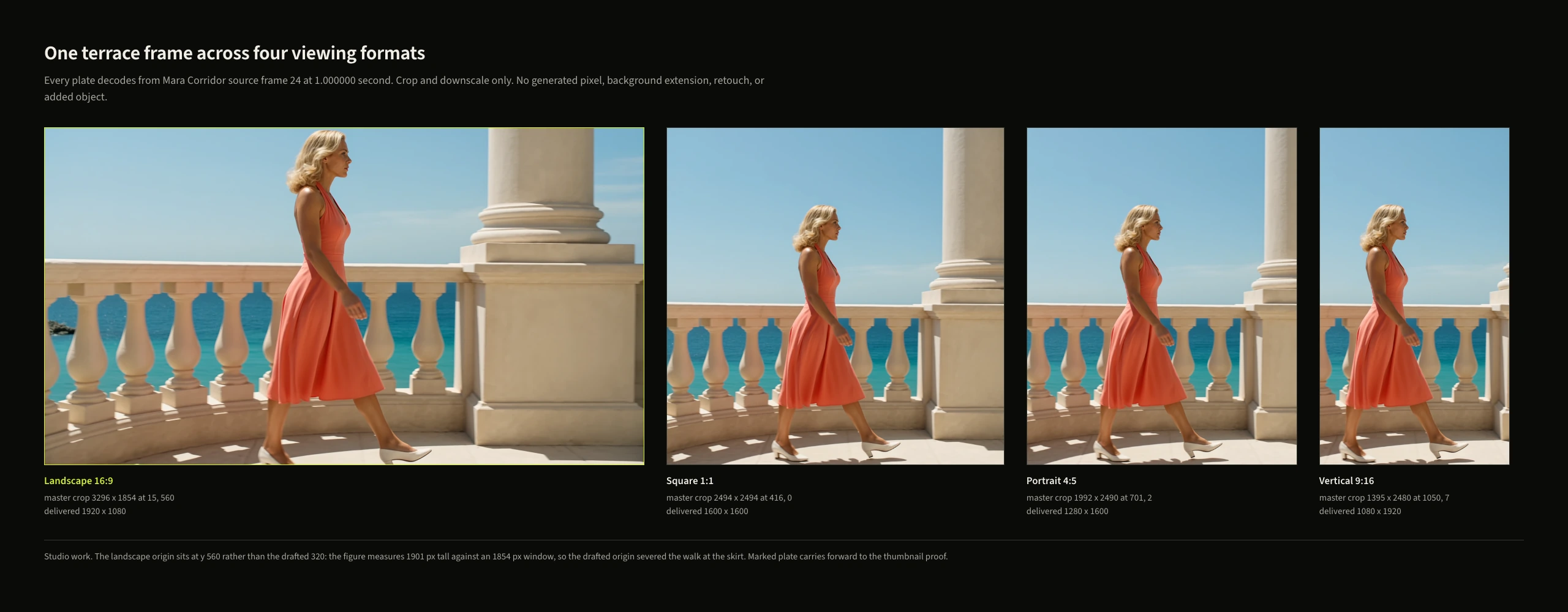
Generated production also shortens the path to shots that would otherwise need travel, a physical set, a large background environment, or a dangerous practical setup. Alternate crops, held frames, and supporting campaign images can all share one approved visual system.
Speed depends on the shot. Exact dialogue, detailed product behavior, complex contact, crowded action, and long continuous performances demand more control and more review. A short visual passage with one clear action is a cleaner unit to direct, which is why good AI-era films are built from them.
Some scopes can use fewer physical resources
A film can cost less when generated material removes a defined physical burden from the scope: building a set, moving a crew, dressing a large environment, staging a hazardous image. The saving belongs to that specific production decision, not to the technology in general.
Everything else stays in the scope. The team still develops the concept, prepares references, directs shots, reviews takes, repairs continuity, edits picture, designs sound, clears usage questions, creates versions, and completes the handoff.
Ask which physical requirements were removed and which new review tasks were added. That answer tells you more about a production than any broad promise about efficiency ever will.
Direction and taste still shape every frame
Direction decides what the film should make the audience feel, which image carries that purpose, and how each shot advances the sequence. Taste governs casting, framing, light, texture, rhythm, restraint, and the point where an image is ready to use.
Selection matters more than ever because generated material offers many plausible directions, and plausible is a low bar. The director's real job is rejection: shots that drift from the brand, weaken the idea, break physical logic, or create an edit problem all die in review, no matter how pretty they are.
The motion work shows how Keyframe0 frames action, contact, environments, held moments, and delivery versions. Keyframe0 uses AI image, video, and audio generation as part of its production process, under the studio's direction.
Continuity control becomes visible production work
Continuity covers faces, bodies, wardrobe, product shape, logos, props, weather, time of day, geography, screen direction, camera behavior, and sound. Each accepted shot enters and leaves in a state the surrounding shots can use.
A practical review asks:
- Does the subject match the approved identity?
- Do wardrobe, product, props, and set details stay consistent?
- Does the action preserve weight, contact, and physical cause?
- Does the camera support the blocking and edit?
- Does the final frame create a usable cut or hold?
- Does the sound belong to the visible action and intended release?
Beauty cannot carry a continuity failure. The film has to work as a sequence, and a gorgeous shot that breaks the sequence is a gorgeous problem.
Postproduction still makes the film
The edit controls order, duration, reactions, transitions, and the relationship between picture and sound. It can build tension from fixed frames, hold a long atmospheric beat, or cut around a contained weakness while the story stays clear.
Sound gives weight to action and joins shots across a cut. Dialogue brings timing, performance, and lip-movement requirements. Music and ambience set pace and scale. Final review covers every agreed crop, duration, caption need, poster frame, held frame, and delivery format.
Send the moment, audience, publishing surfaces, source material, rights, and fixed constraints through Work with us to scope a brand film in writing.